How to Learn & Practice What's in the Painting? Together איך לומדים ומתרגלים יחד: מה בציור?
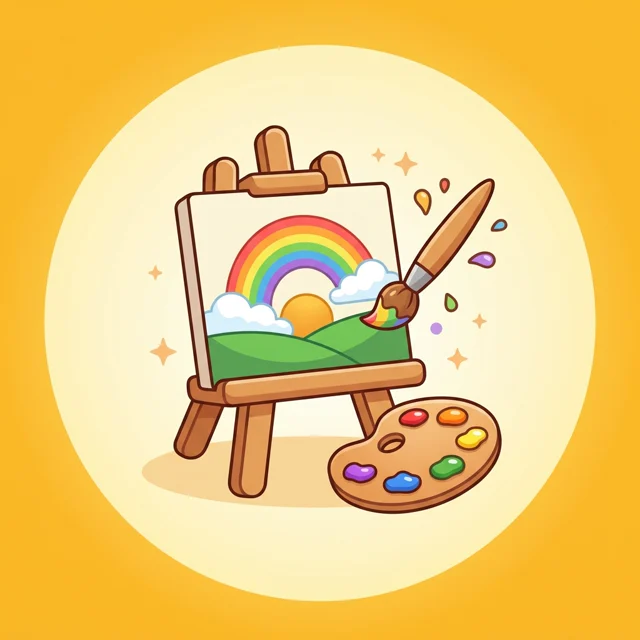
Curiosity is the engine of all learning, and this unit is built entirely around it. In What's in the Painting?, a picture reveals itself a little at a time, and learners are invited to guess what is hidden inside before the full image appears. Along the way they meet the words for painting, color, brush, paper, and more, and they practice guessing and describing in both Hebrew and English. The slow reveal keeps attention focused and turns every video into a gentle puzzle, which is exactly the kind of experience that makes young children lean in and keeps adult beginners engaged without any pressure.
The guessing game is wonderfully easy to recreate at home. Cover part of a picture in a book or magazine with your hand, and ask what might be hiding underneath. Encourage full answers: not just a single word, but a little description of the colors and shapes the learner can see. Say it first in one language, then in the other. You can also draw a simple shape and let your child guess what it is becoming as you add one line at a time. These conversations stretch vocabulary naturally, because describing what you see always calls for more and richer words.
The printable activity sheet turns observation into art. Draw together, then describe what each of you created using the color and shape words you practiced. You can also play a listening game: one person describes a hidden picture while the other tries to draw it from the description alone. This is a wonderful way to practice giving and receiving directions, and it works just as well for two adults practicing a new language together as it does for a parent and child.
For bilingual families, this unit strengthens the descriptive vocabulary that children use every day, in both languages at once. For adult beginners, the visual clues provide a comforting safety net, so the words never feel like a test. The deeper lesson is a gift for every age: learning to look slowly and carefully is its own quiet superpower, and it makes the whole world a little more interesting. Every reveal is a small reward for paying close attention, and attention is the first step into every new word.
סקרנות היא המנוע של כל למידה, והיחידה הזו בנויה כולה סביבה. במשחק מה בציור? תמונה נחשפת טיפין טיפין, והלומדים מוזמנים לנחש מה מסתתר בפנים לפני שהתמונה המלאה מופיעה. בדרך הם פוגשים את המילים ציור, צבע, מכחול, דף ועוד, ומתרגלים ניחוש ותיאור בעברית ובאנגלית. החשיפה האיטית שומרת על ריכוז והופכת כל סרטון לחידה עדינה, וזה בדיוק סוג החוויה שגורם לילדים צעירים להתקרב ולמבוגרים מתחילים להישאר מעורבים בלי שום לחץ.
את משחק הניחוש קל מאוד לשחזר בבית. כסו חלק מתמונה בספר או במגזין עם היד, ושאלו מה עלול להסתתר מתחת. עודדו תשובות מלאות: לא רק מילה בודדת, אלא תיאור קטן של הצבעים והצורות שהלומד רואה. אמרו זאת קודם בשפה אחת ואז בשנייה. אפשר גם לצייר צורה פשוטה ולתת לילד לנחש למה היא הופכת כשמוסיפים קו אחד בכל פעם. השיחות האלה מותחות את אוצר המילים באופן טבעי, כי תיאור של מה שרואים תמיד דורש עוד מילים עשירות יותר.
דף הפעילות להדפסה הופך את ההתבוננות לאמנות. ציירו יחד, ואז תארו את מה שכל אחד יצר באמצעות מילות הצבע והצורה שתרגלתם. אפשר גם לשחק במשחק הקשבה: אדם אחד מתאר תמונה נסתרת בזמן שהשני מנסה לצייר אותה רק מהתיאור. זוהי דרך נפלאה לתרגל נתינה וקבלה של הוראות, והיא עובדת באותה מידה לשני מבוגרים שמתרגלים שפה חדשה יחד כמו להורה ולילד.
כדאי גם לחבר את הנושא לאמנות בבית: הניחו מול הילד חפץ מוכר, ובקשו ממנו לצייר אותו בזמן שהאחרים מנחשים מה מצויר, ולאחר מכן תארו יחד את הצבעים והצורות בשתי השפות. אפשר להתבונן יחד בתמונות אמיתיות, בציורים מפורסמים או באיורים בספרים, ולשאול מה רואים, מה מסתתר ומה הצבעים מספרים. כך הילד לומד שהתבוננות זהירה היא שער לרעיונות ולמילים. אפשר גם לצייר יחד את אותו נוף ולגלות איך כל אחד רואה את אותו הדבר קצת אחרת, וזה כשלעצמו שיעור נפלא. כך כל ציור, גדול או קטן, טומן בחובו סיפור שמחכה שיספרו אותו.
למשפחות דו-לשוניות היחידה הזו מחזקת את אוצר המילים התיאורי שילדים משתמשים בו בכל יום, בשתי השפות בבת אחת. למבוגרים מתחילים, הרמזים החזותיים מספקים רשת ביטחון מנחמת, כך שהמילים לעולם לא מרגישות כמו מבחן. הלקח העמוק יותר הוא מתנה לכל גיל: ללמוד להסתכל לאט ובזהירות הוא כוח-על שקט משל עצמו, והוא הופך את העולם כולו למעניין קצת יותר.